
Database Access Monitoring
OpenGard is a self-hosted database access monitoring and audit platform. Monitor every query, detect violations, and stay compliant.
Supported Databases:
 PostgreSQL
 MySQL
MySQL
 SQL Server
 Oracle
OpenGard is a self-hosted database access monitoring and audit platform. Monitor every query, detect violations, and stay compliant.
Supported Databases:
PostgreSQL
MySQL
SQL Server
Oracle
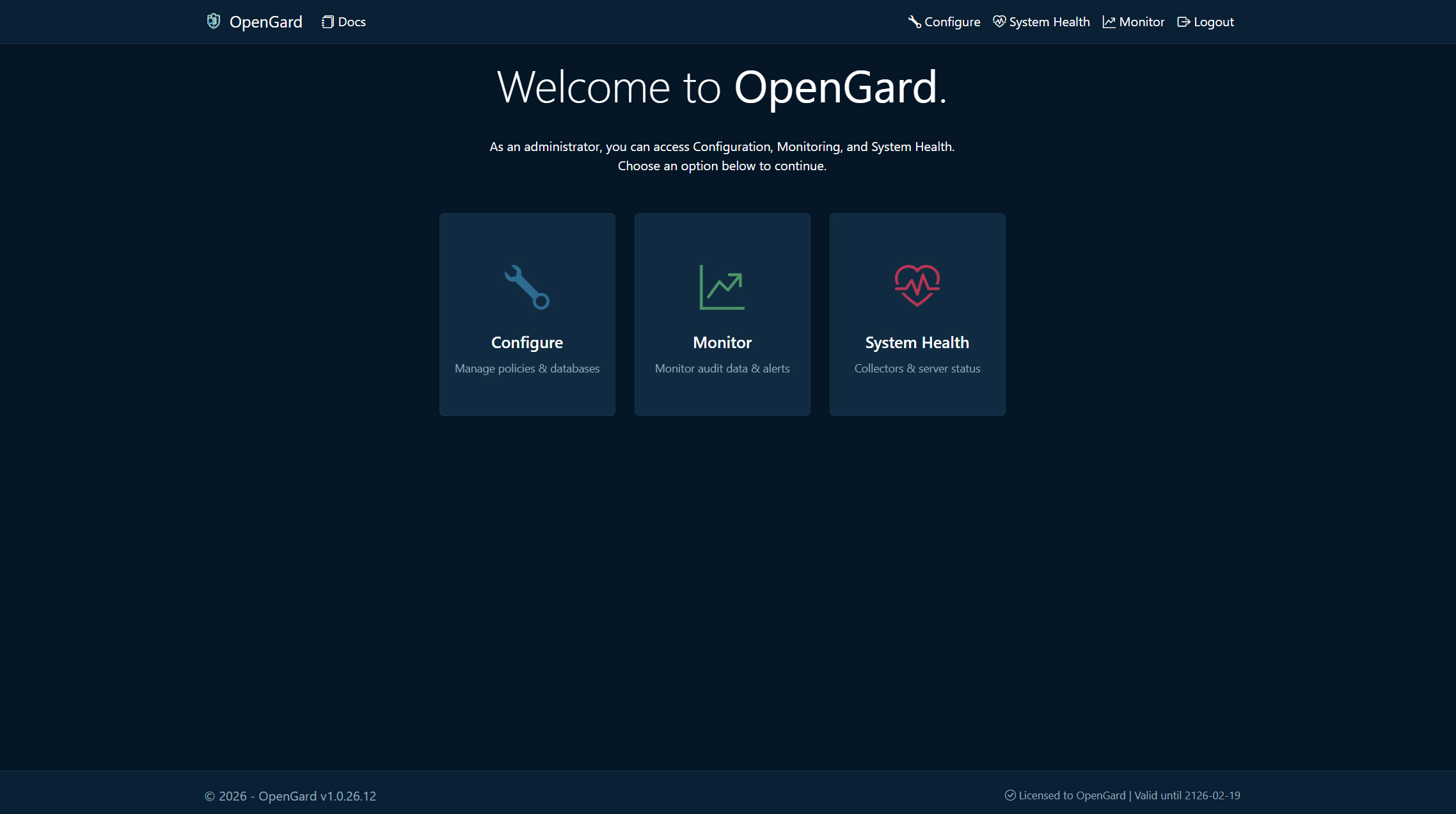
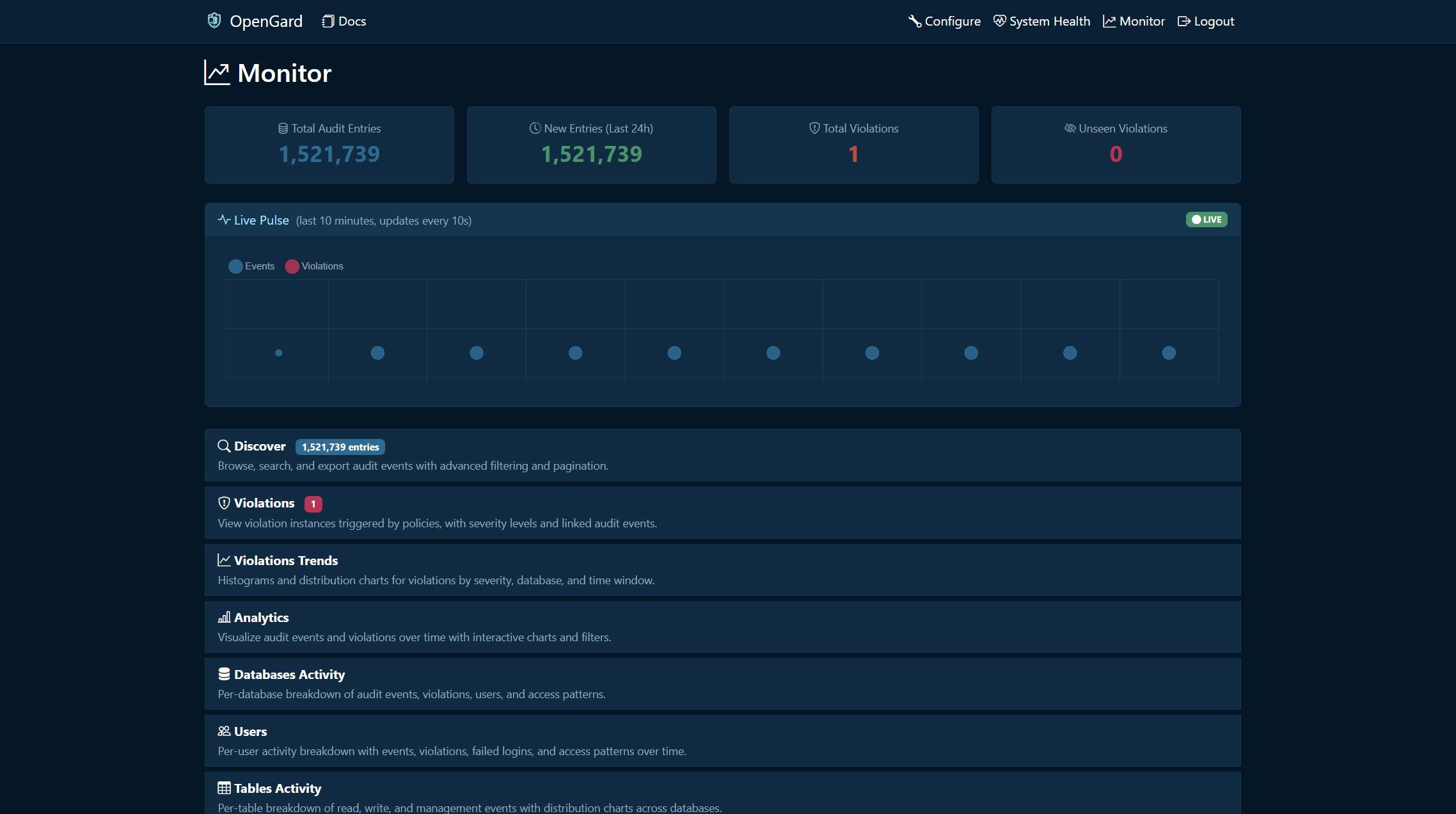
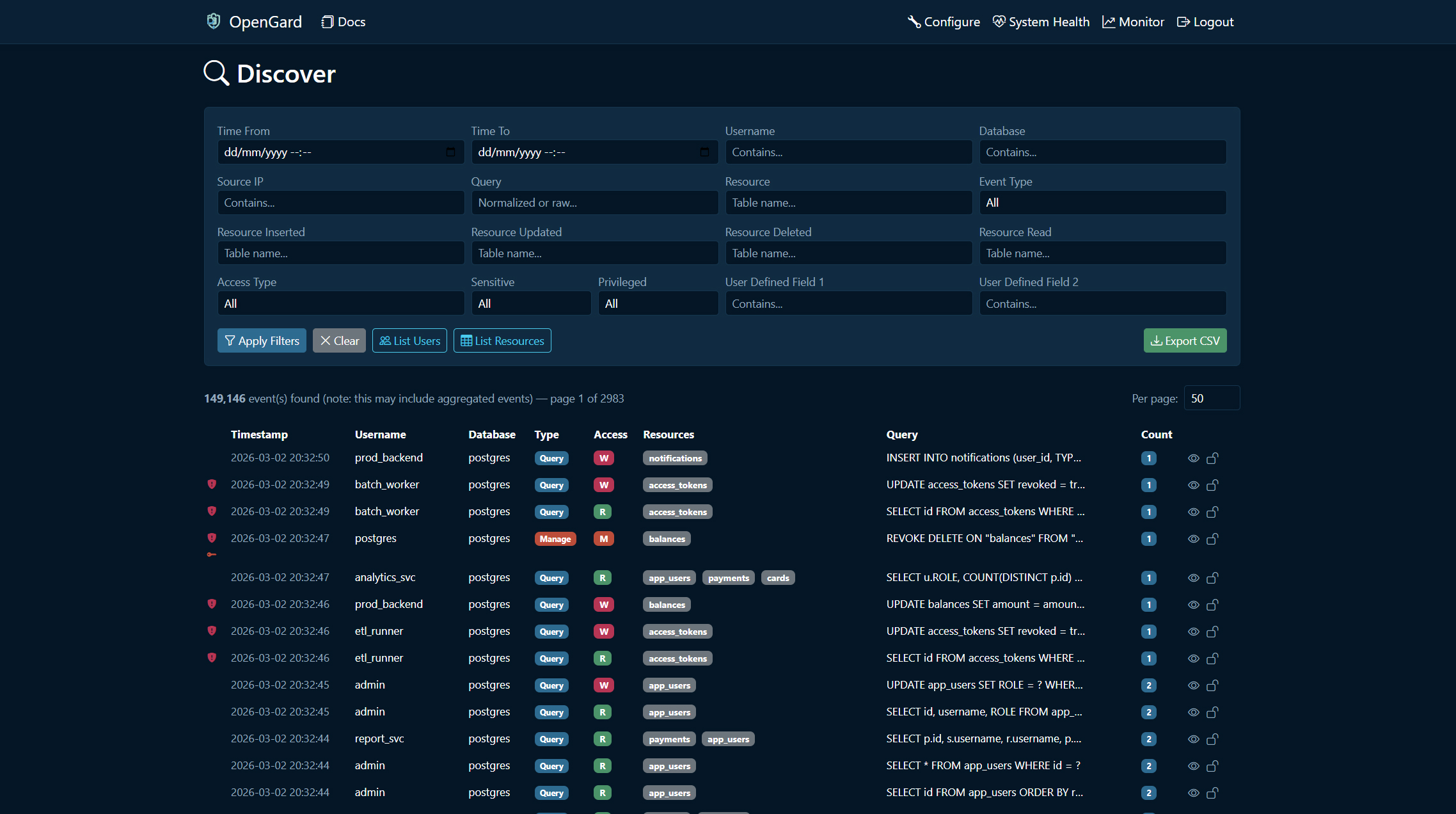
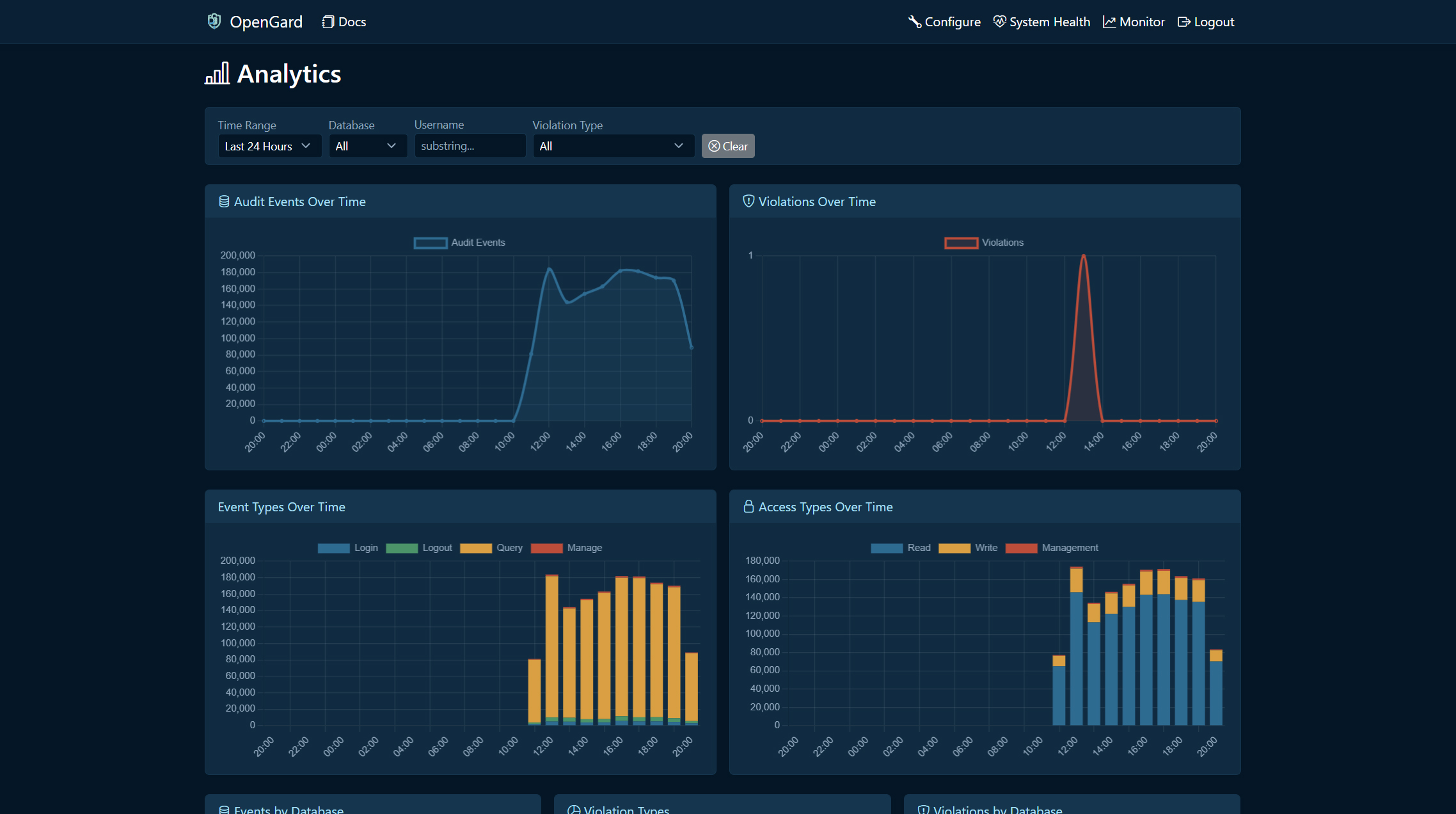
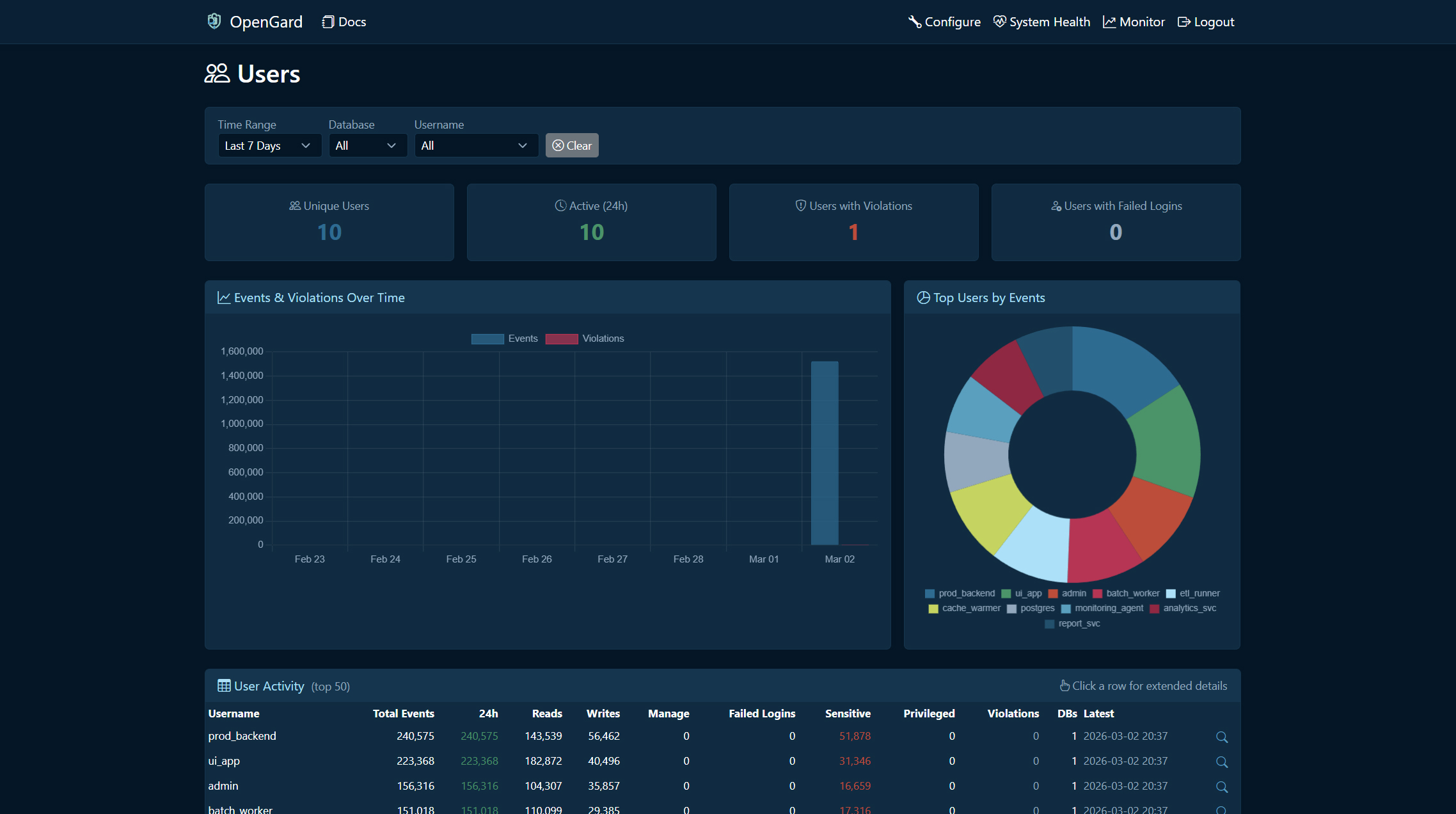
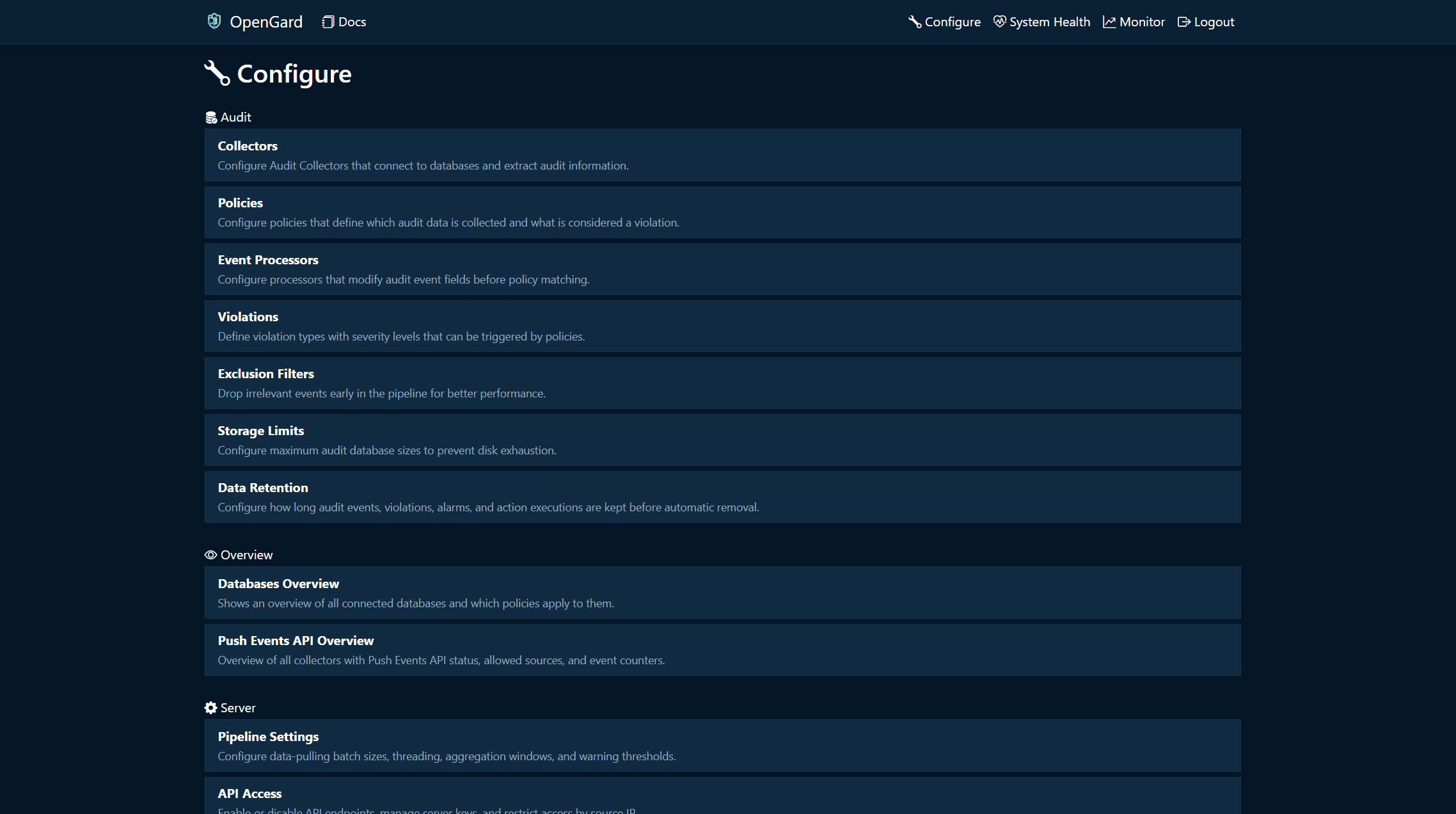
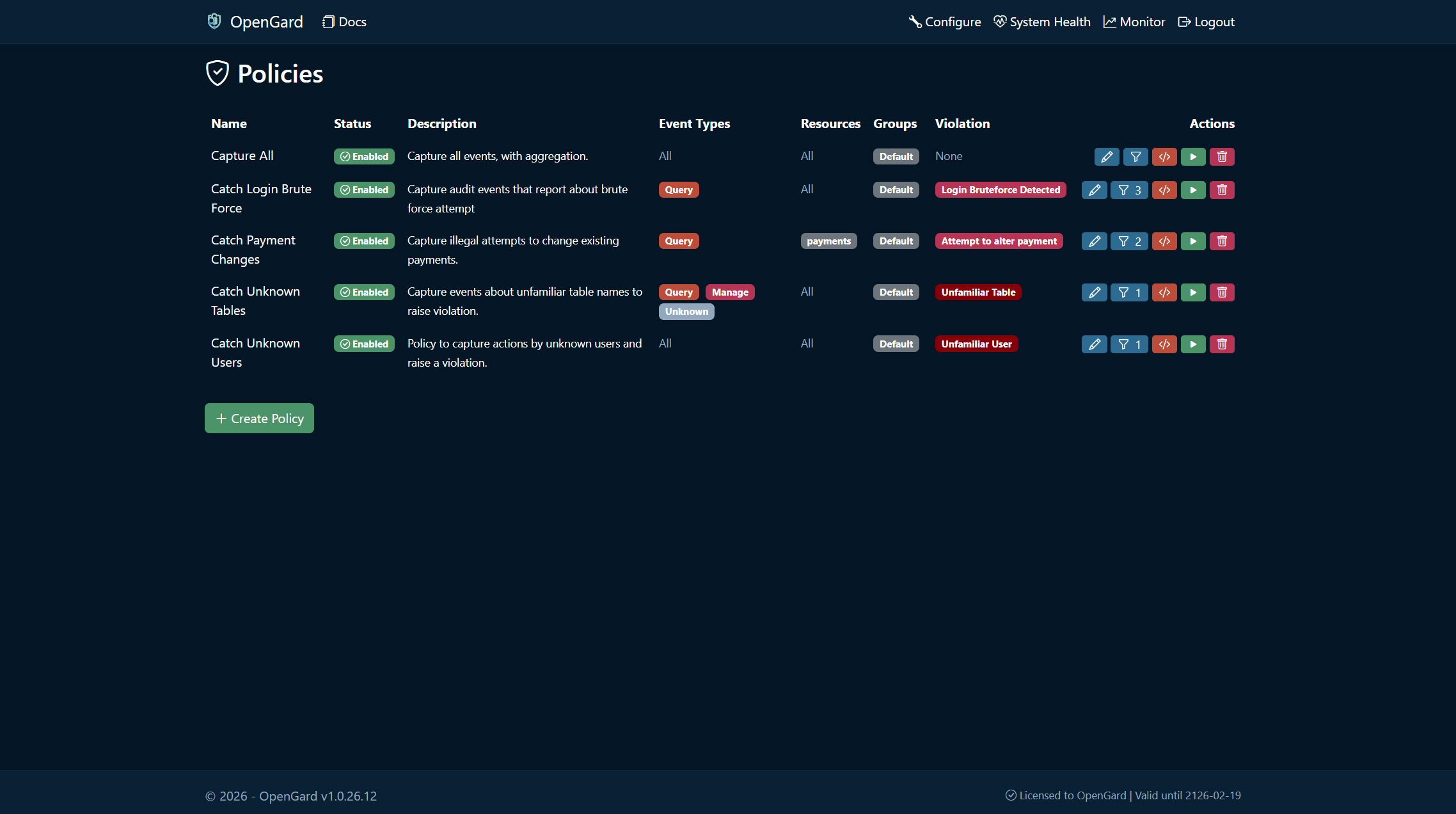
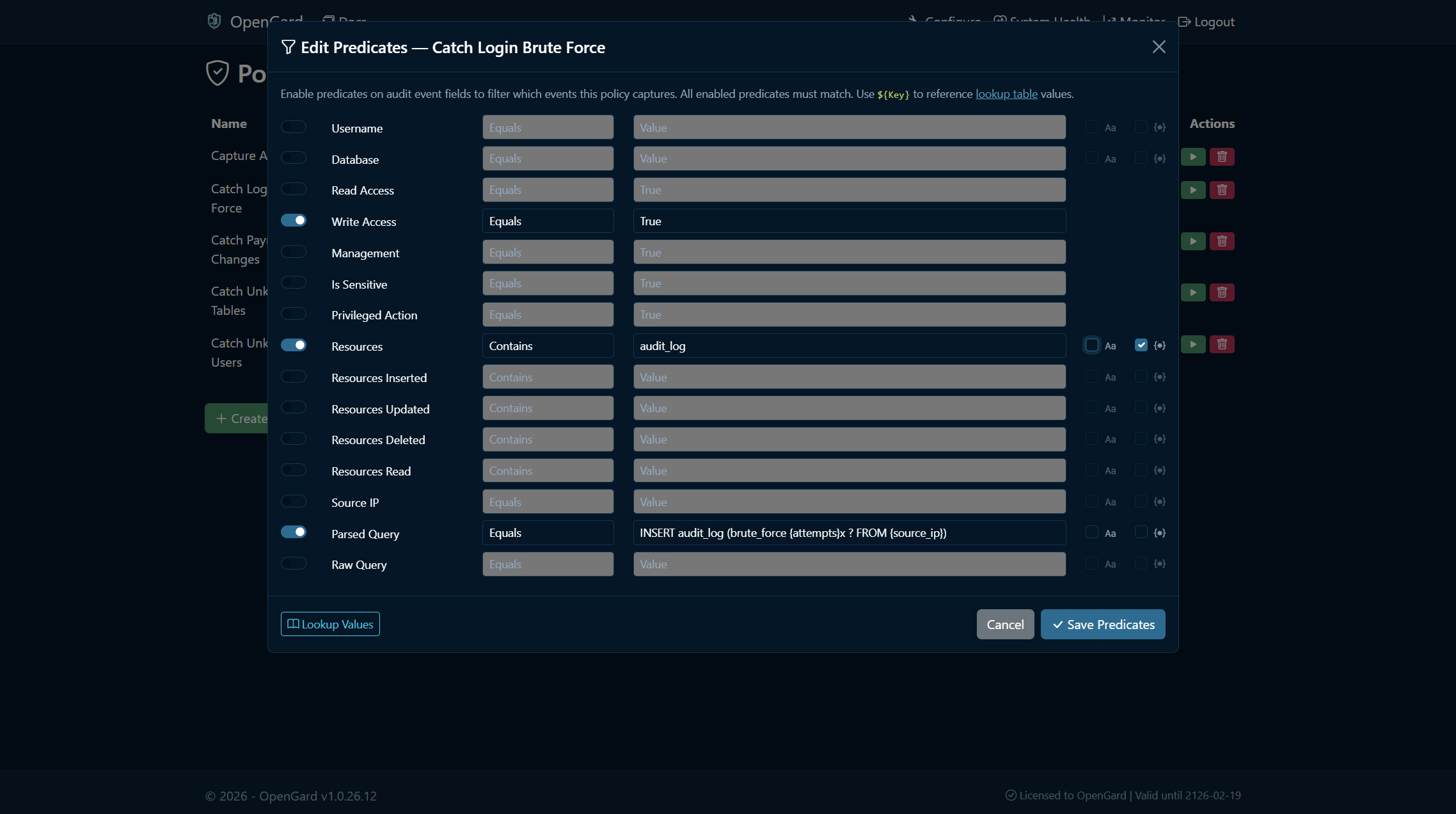
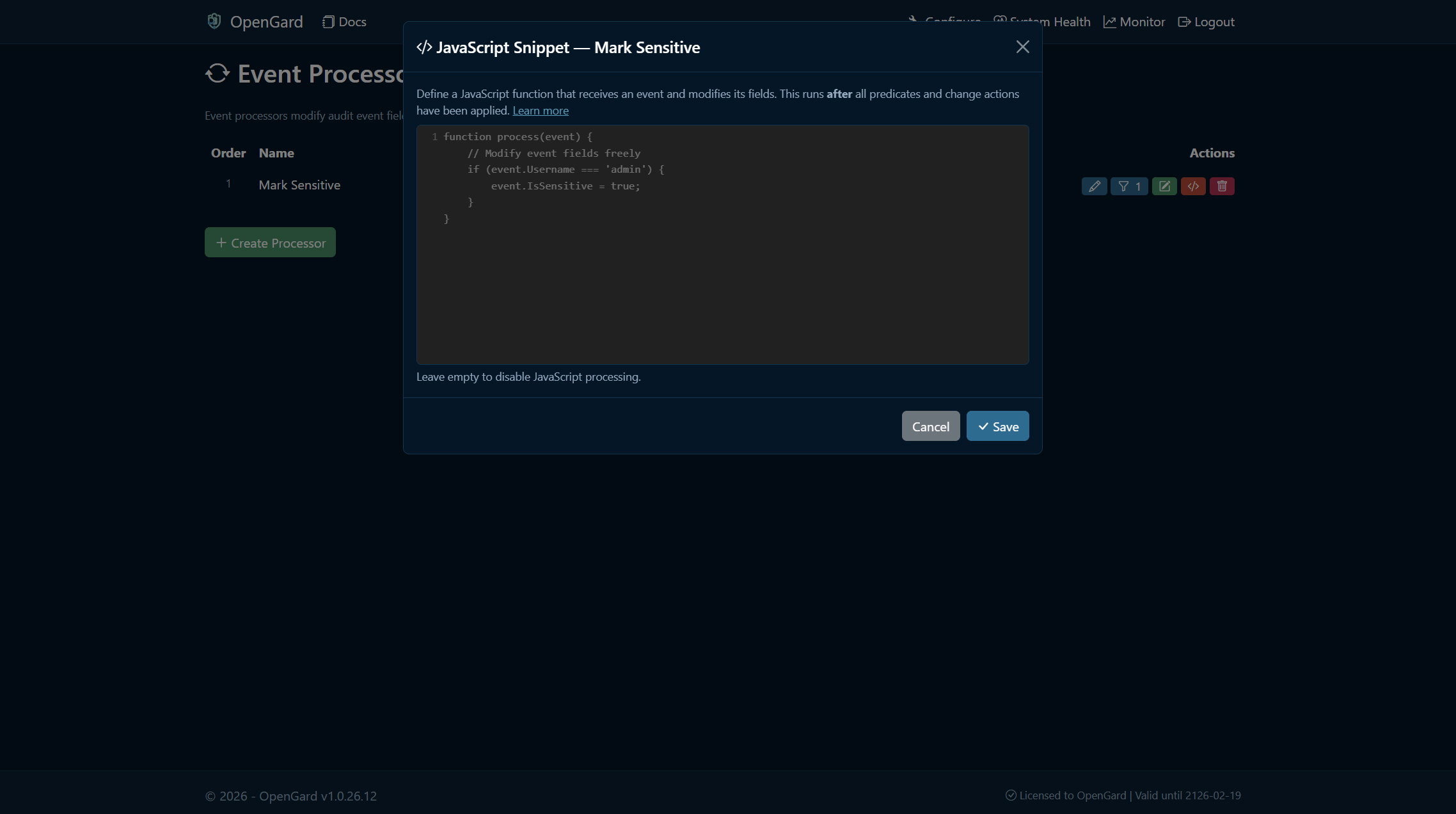
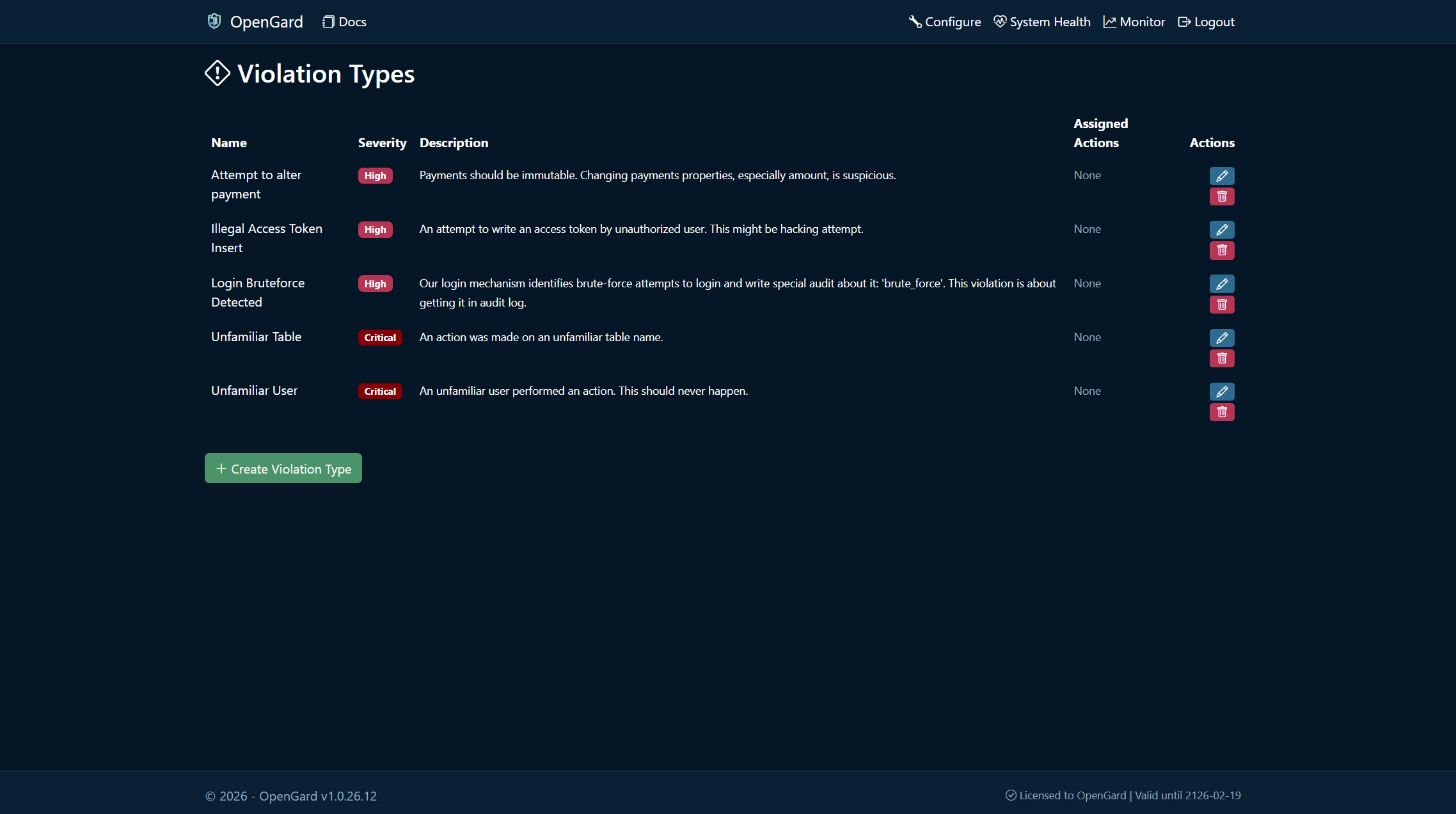
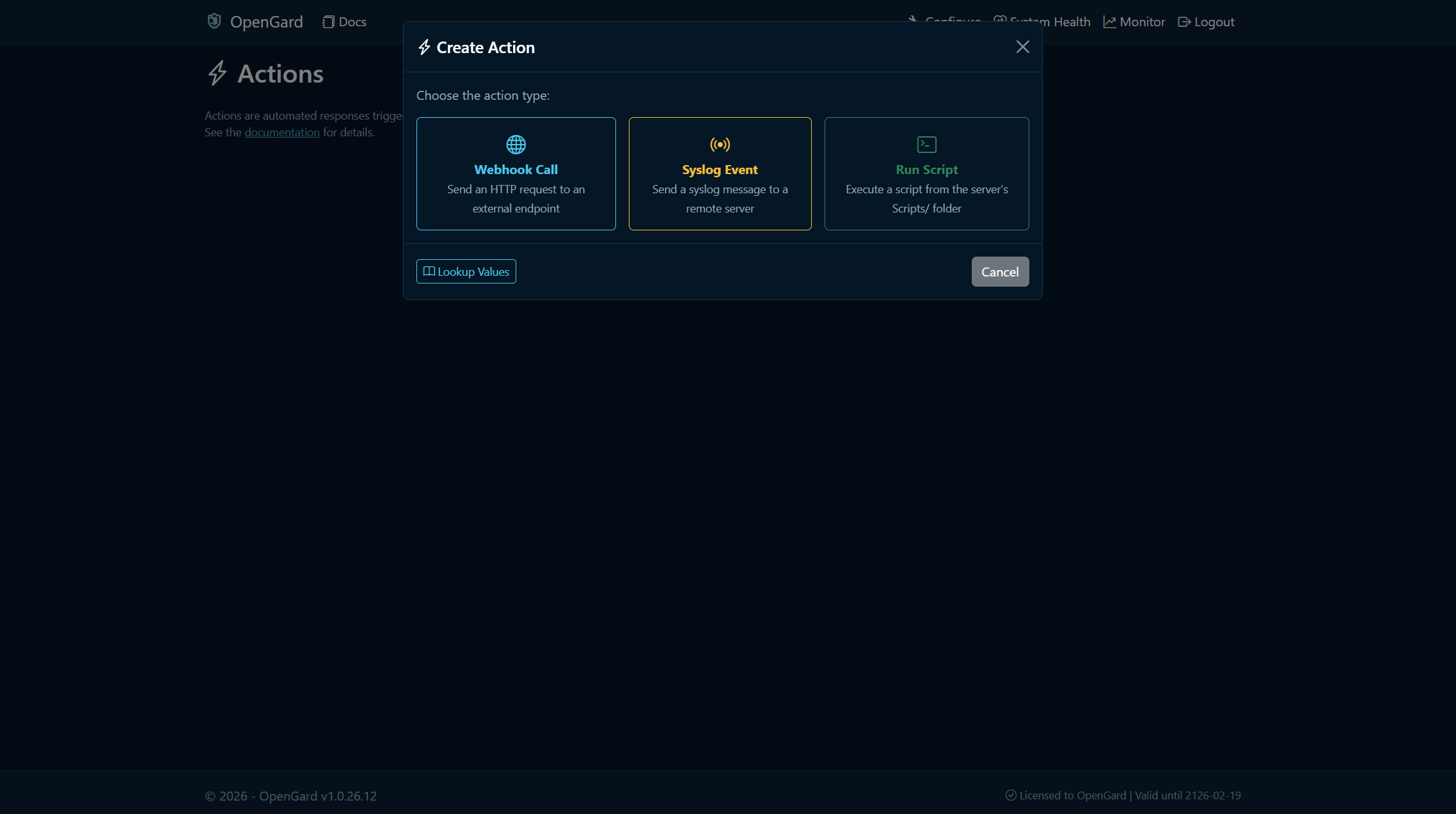
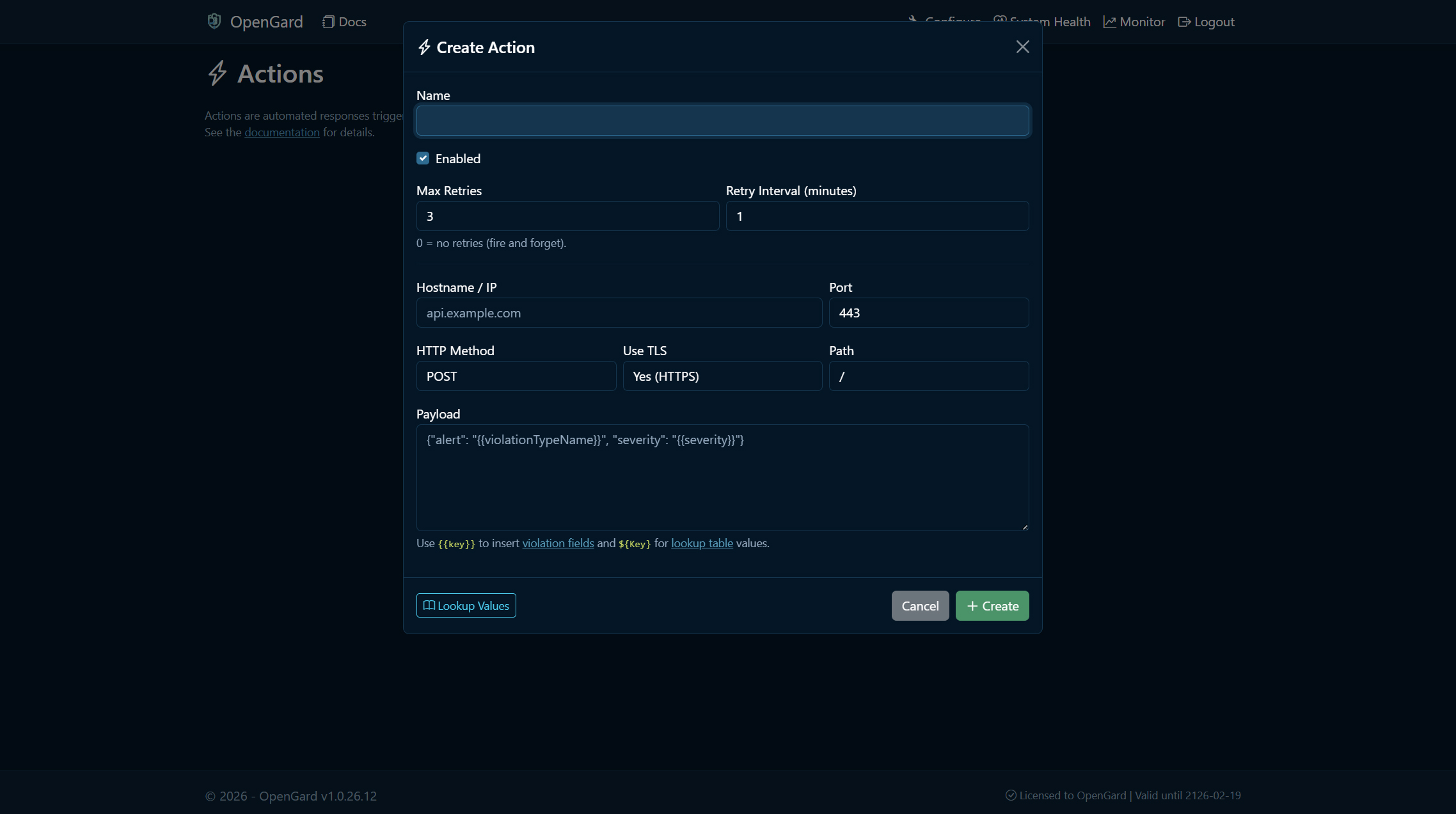
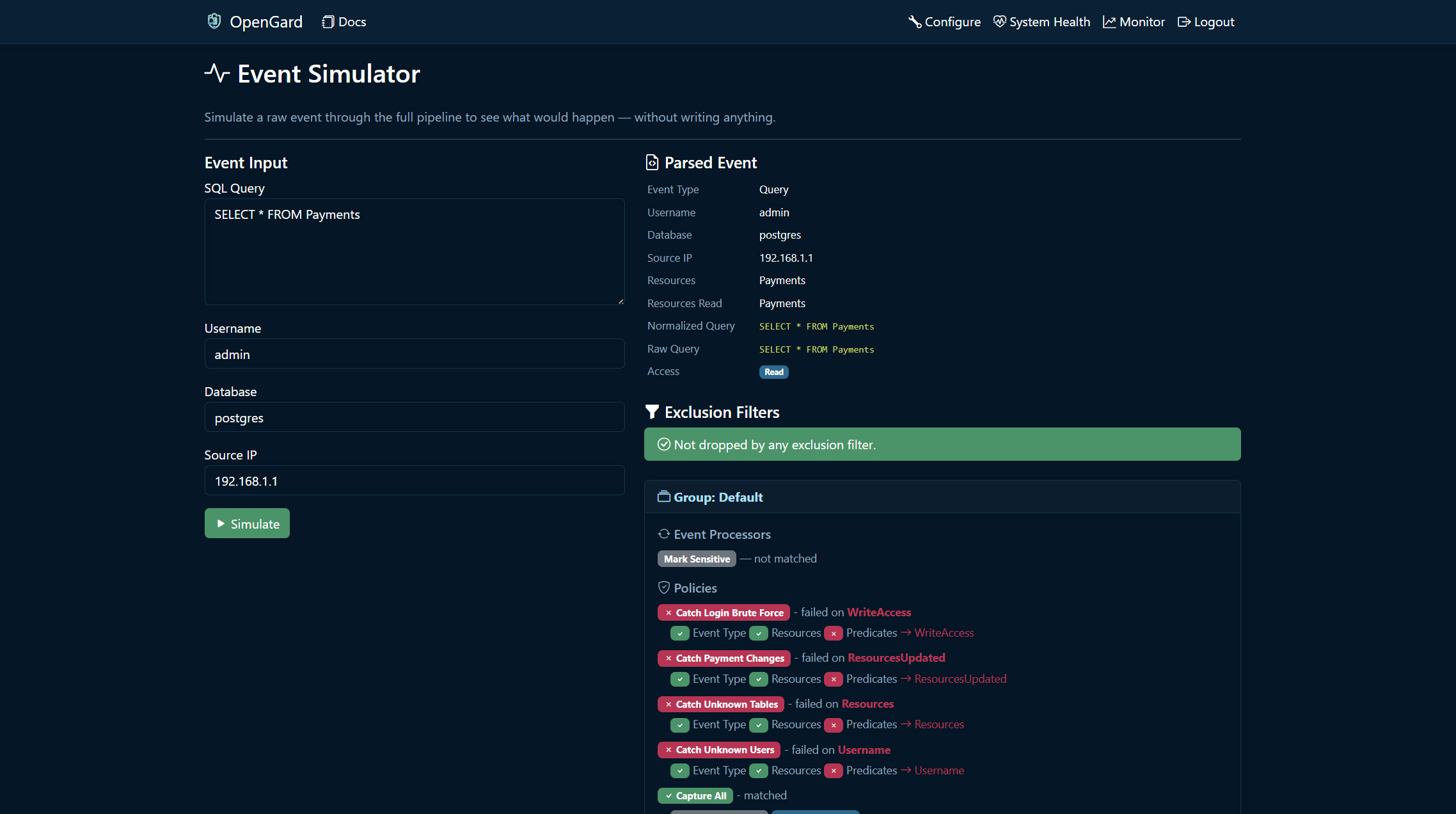
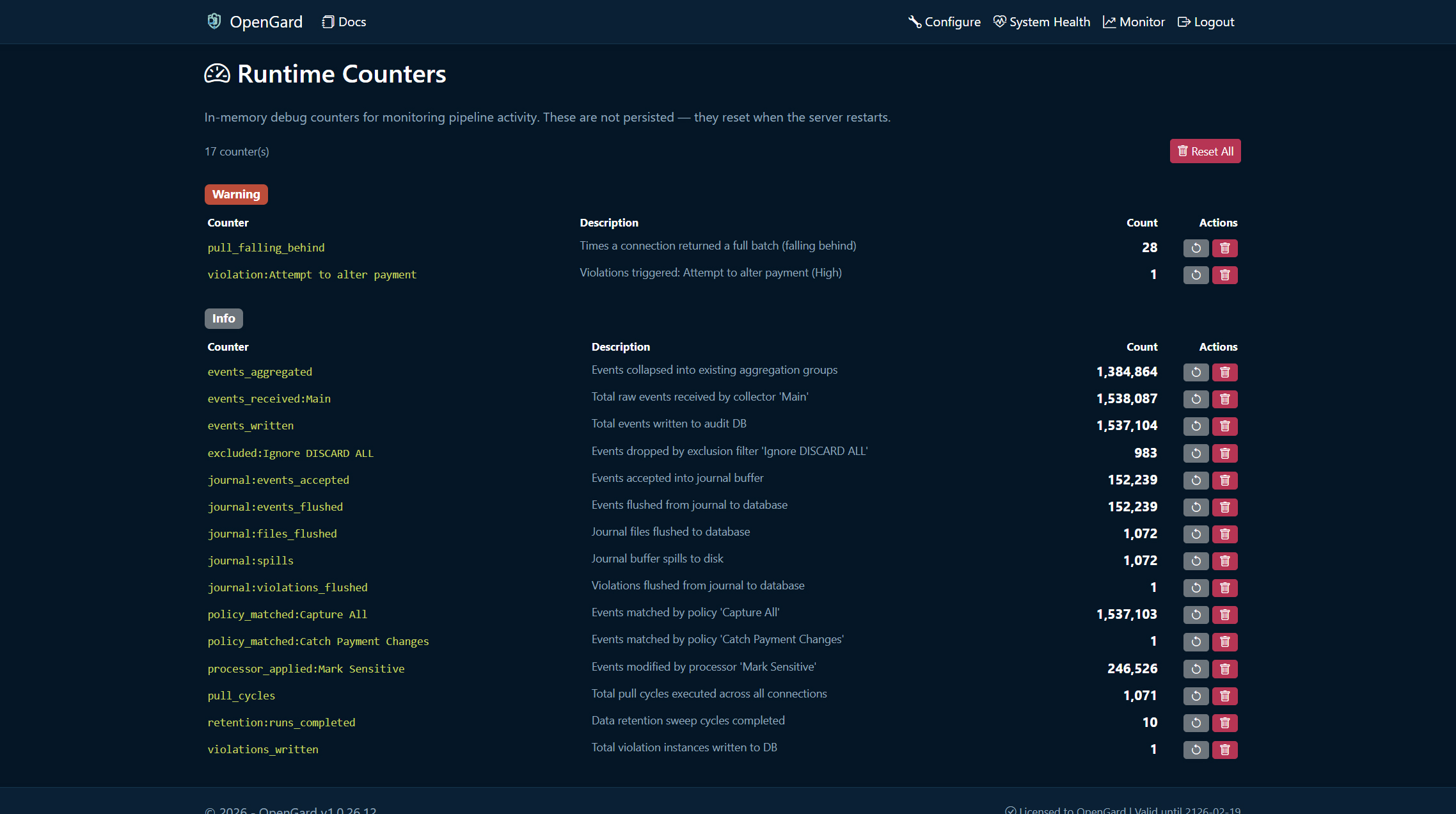
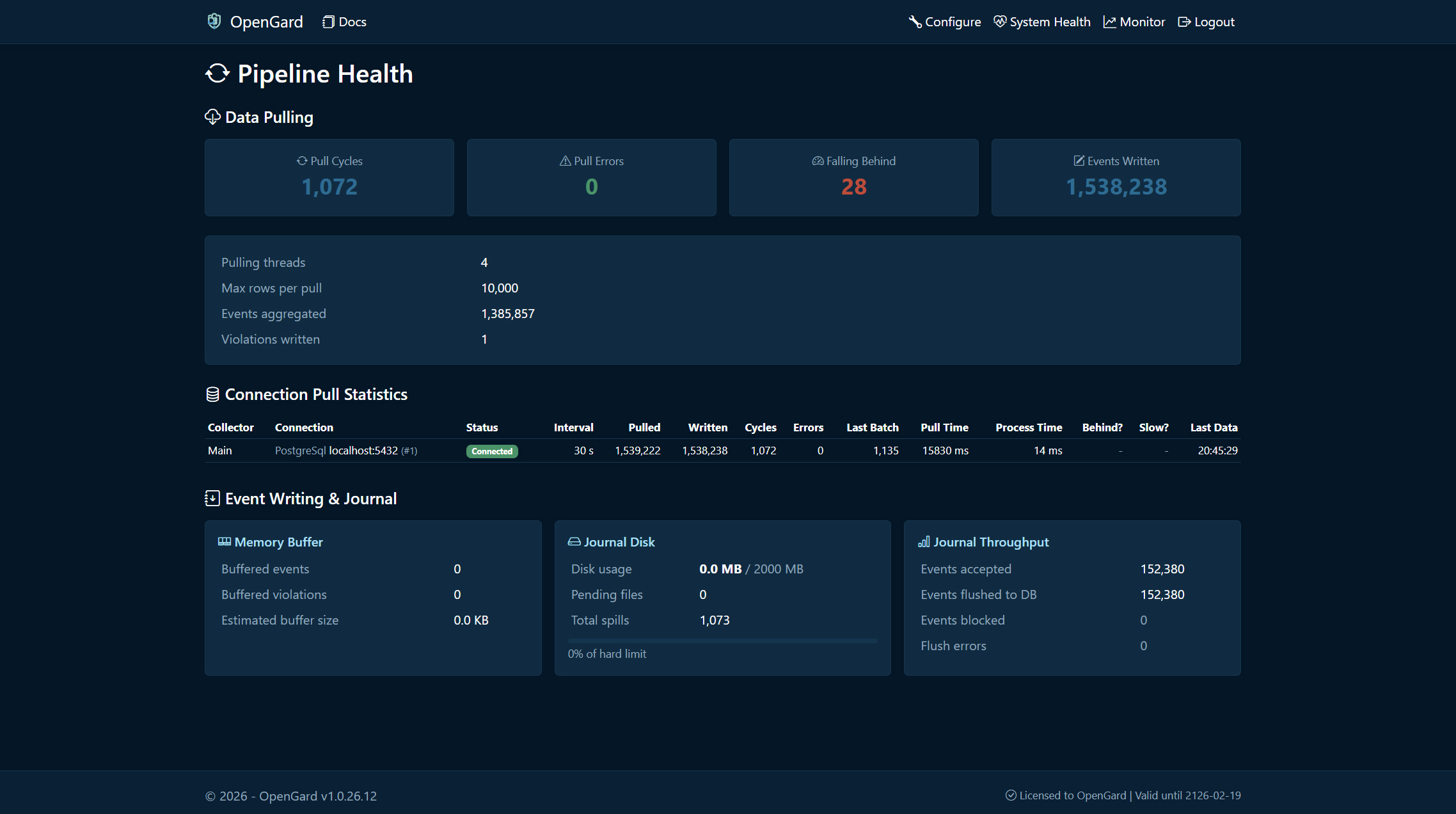
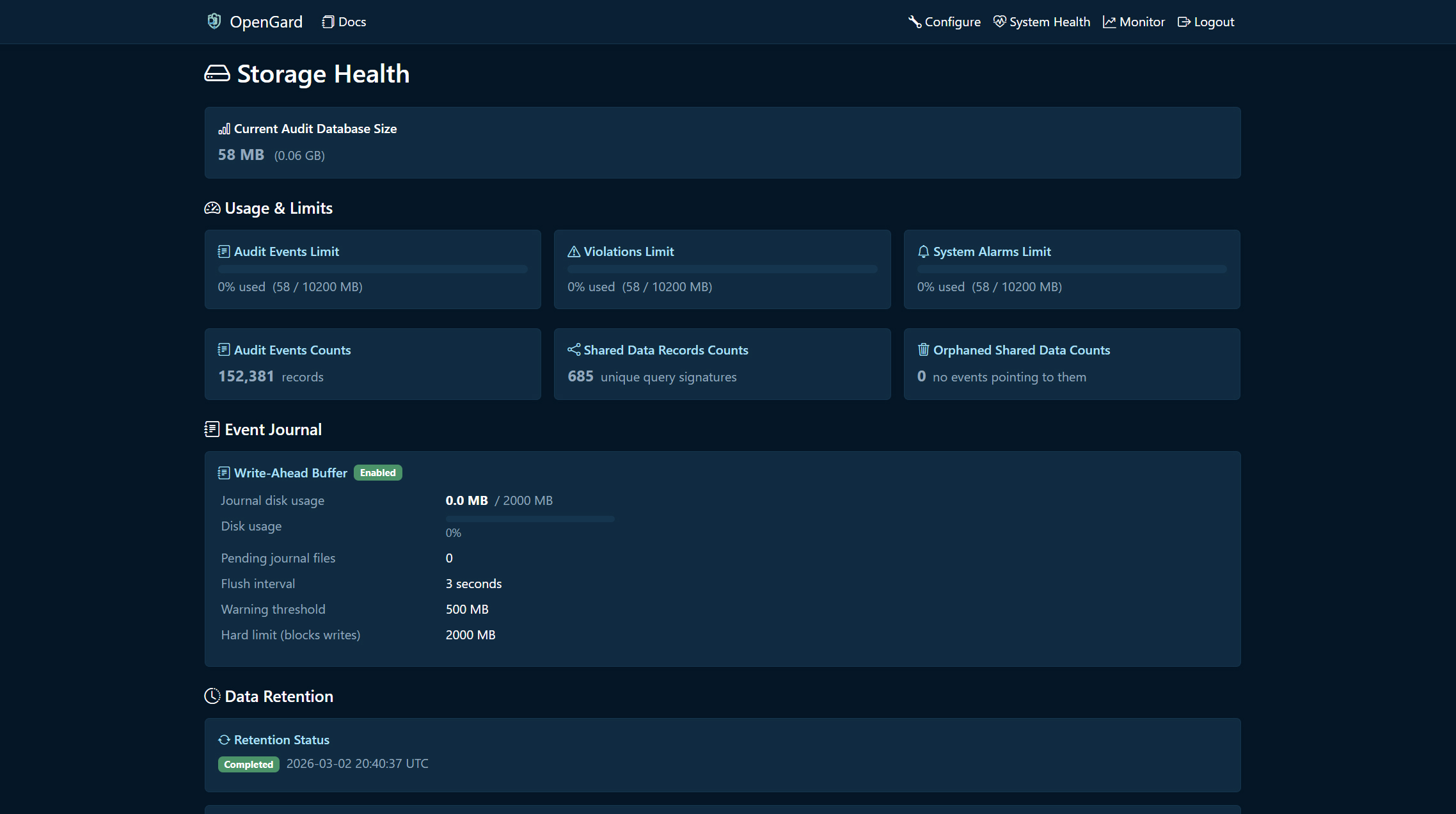
A complete audit platform that connects to your databases, collects query logs, and turns them into actionable security intelligence.
Collectors connect to your databases, enable native query logging, and pull audit logs into structured events.
Define policies with predicates, event types, and resource filters. Violations are raised automatically when policies match.
Trigger webhooks, syslog messages, or scripts when violations occur. Integrate with your SIEM, Slack, or incident tools.
Discover events, drill into violations, track trends, and monitor database activity with built-in dashboards.
Transform, enrich, or normalize audit events before policy matching with configurable processors and JavaScript scripting.
Query events, violations, and alarms programmatically. Push events from external sources. Full configuration API.
From installation to your first violation alert in minutes.
Download and run. No external dependencies.
Add your databases using the setup wizard or UI.
Create audit policies to capture events that matter.
Discover, review violations, and receive automated alerts.
OpenGard runs entirely on your own infrastructure. No data ever leaves your network. No cloud dependency. No third-party access. Your audit trail is yours alone.
Delivered as a single self-contained executable for Windows and Linux. No runtime installation required.
OpenGard provides the monitoring and audit capabilities commonly needed for regulatory frameworks.
Monitor and log access to databases containing personal data.
Capture audit trails for databases with protected health information.
Log and alert on access to databases storing cardholder data.
Maintain database access evidence trails for financial systems.
Disclaimer: OpenGard is a monitoring tool that can help support compliance efforts, but achieving compliance depends on your specific configuration, policies, and use case. It is the user's responsibility to evaluate and configure the product to meet their regulatory requirements.
Start with a free evaluation. No credit card required.